
Unisex vs Men's vs Women's Perfumes: What's the Difference?
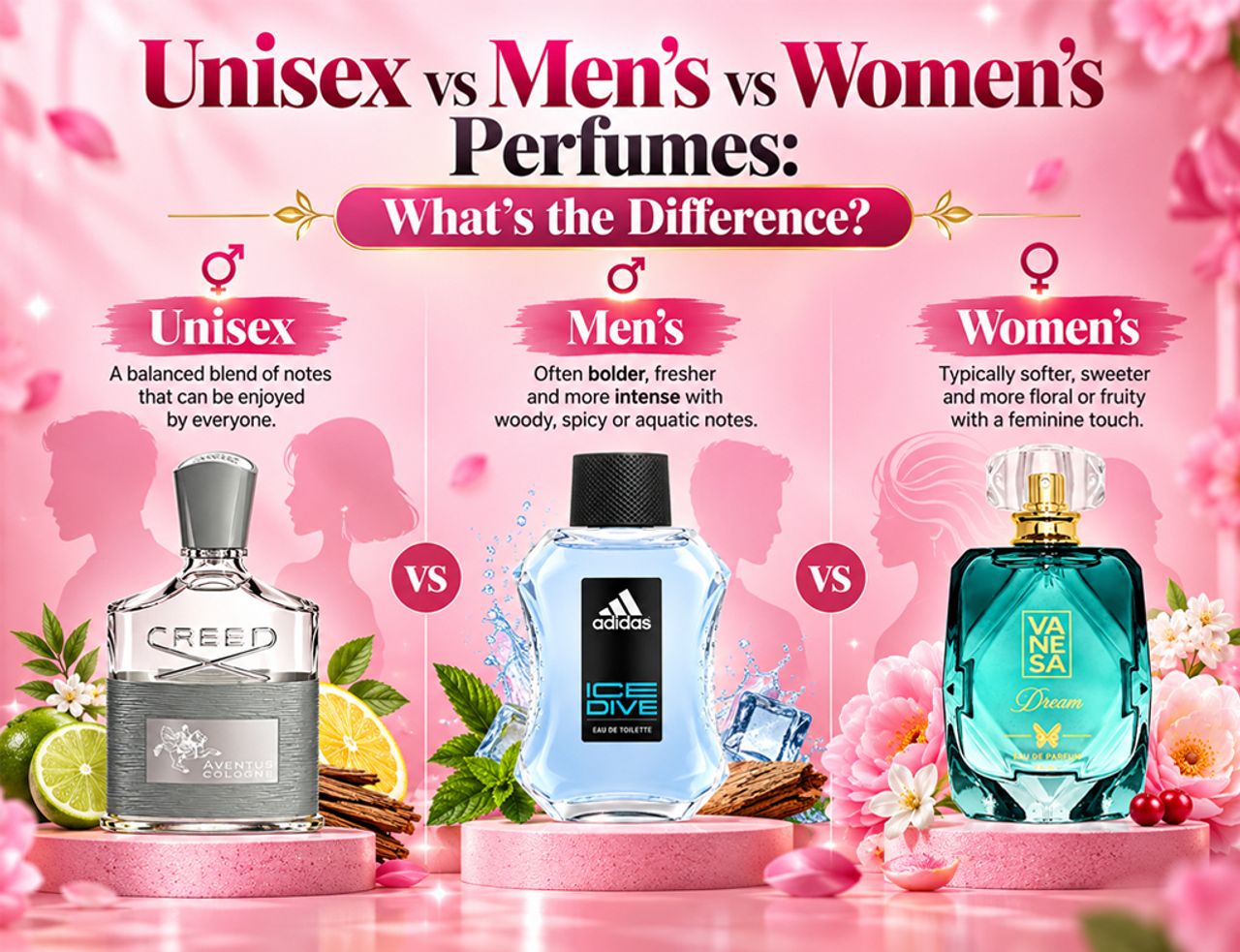
Choosing the right perfume is about more than just finding a pleasant fragrance. Perfumes can express your personality, complement your style, and create a memorable impression. However, when shopping for fragrances, you will often come across three main categories: men's perfumes, women's perfumes, and unisex perfumes. Each category has its own characteristics, fragrance styles, and appeal.
But what exactly makes them different? Are men's perfumes stronger than women's perfumes? Can women wear men's fragrances, or can men enjoy women's perfumes? In this guide, we will explore the differences between unisex, men's, and women's perfumes to help you find the perfect fragrance for your preferences.
1. What Are Men's Perfumes?
Men's perfumes are fragrances traditionally designed and marketed for men. They often feature bold, fresh, woody, spicy, and aromatic notes that create a confident and sophisticated scent profile.
Common fragrance notes in men's perfumes include:
Woody: Sandalwood, cedarwood, and vetiver.
Fresh: Bergamot, lemon, and aquatic notes.
Spicy: Black pepper, cardamom, and cinnamon.
Aromatic: Lavender, rosemary, and sage.
Leather and smoky: Leather, tobacco, and smoky accords.
Men's fragrances are available in different styles, ranging from light and refreshing scents for everyday wear to deep, intense fragrances for evenings and special occasions.
For example, a fresh citrus perfume may be suitable for the office or daytime activities, while a woody and spicy fragrance can be an excellent choice for parties, dinners, and formal events.
However, these fragrance notes are not exclusive to men. Anyone who enjoys these scents can wear them.
2. What Are Women's Perfumes?
Women's perfumes are traditionally marketed toward women and often feature floral, fruity, sweet, powdery, and gourmand fragrance notes. These scents can range from delicate and romantic to rich, elegant, and luxurious.
Popular fragrance notes in women's perfumes include:
Floral: Rose, jasmine, peony, and lily.
Fruity: Apple, peach, berries, and pear.
Sweet: Vanilla, caramel, and praline.
Powdery: Iris, violet, and soft musk.
Fresh: Citrus, green notes, and light aquatic accords.
Women's fragrances are available in a wide variety of styles. A floral perfume can create a soft and elegant impression, while a sweet vanilla fragrance may feel warm and comforting. Rich amber and woody perfumes can also offer a luxurious scent suitable for evening wear.
Women's perfumes are often chosen for daily use, celebrations, romantic occasions, and professional settings. Nevertheless, fragrance preferences are personal, and there is no rule that limits these scents to women.
3. What Are Unisex Perfumes?
Unisex perfumes are fragrances designed and marketed for everyone, regardless of gender. Instead of focusing on traditionally masculine or feminine scent profiles, these perfumes emphasize the fragrance itself.
Unisex fragrances can feature a balanced combination of fresh, woody, citrus, floral, musky, spicy, and oriental notes.
Common notes found in unisex perfumes include:
Citrus: Bergamot, grapefruit, and lemon.
Woody: Sandalwood, cedarwood, and vetiver.
Musk: Clean, soft, and skin-like accords.
Amber: Warm, rich, and resinous notes.
Green and herbal: Tea, fig leaves, and aromatic herbs.
Floral: Rose, jasmine, and other floral accords.
One of the biggest advantages of unisex perfumes is their versatility. They can be shared between partners, used for different occasions, and selected according to individual taste rather than gender-based marketing.
For instance, a citrus and musk fragrance may work beautifully for everyday wear, while a woody amber perfume can provide a sophisticated scent for evening occasions.
4. Key Differences Between Unisex, Men's, and Women's Perfumes
Although these categories may have different traditional fragrance profiles, there is no strict scientific boundary separating them.
Men's perfumes are commonly marketed with fresh, woody, spicy, and aromatic notes.
Women's perfumes are commonly marketed with floral, fruity, sweet, and powdery notes.
Unisex perfumes are marketed for all genders and may combine traditionally masculine and feminine fragrance characteristics.
Another difference is branding and presentation. Men's perfumes may feature darker bottles and bold packaging, while women's perfumes may use decorative bottles and softer designs. Unisex fragrances often feature minimalist or neutral packaging. These are marketing conventions rather than rules about how a fragrance smells.
Importantly, fragrance concentration also matters. Eau de Toilette (EDT), Eau de Parfum (EDP), and Parfum describe fragrance concentration categories, not gender. A men's perfume is not automatically stronger than a women's or unisex perfume.
5. Which Perfume Lasts Longer?
Many people assume that men's perfumes last longer than women's perfumes or that unisex fragrances are lighter. In reality, longevity depends on several factors.
These include:
Fragrance concentration: EDP and Parfum formulations often last longer than EDT, although this varies by formula.
Ingredients: Woody, amber, resinous, and musky notes may remain noticeable for a long time.
Skin type: Fragrance performance can differ from person to person.
Weather: Heat and humidity can influence how a fragrance develops and projects.
Application: Applying perfume to moisturized skin can sometimes help it remain noticeable longer.
When buying a perfume, check its concentration and test its performance on your skin instead of judging it by its gender category.
6. How to Choose the Right Perfume for You
Selecting the right perfume becomes easier when you focus on your preferences, lifestyle, and the occasions for which you need it.
For everyday use: Choose fresh citrus, light florals, clean musk, or subtle woody fragrances.
For office wear: Look for balanced scents that are pleasant without being overpowering, such as soft woods, fresh aromatics, or gentle floral notes.
For parties and evenings: Consider warm amber, spicy woods, vanilla, or richer floral compositions.
For summer: Citrus, aquatic, green, and fresh aromatic fragrances can feel refreshing.
For winter: Woody, spicy, amber, and gourmand fragrances can provide a warm and rich scent experience.
For couples: Unisex perfumes are an excellent option if you want to share a fragrance or enjoy similar scent profiles.
Whenever possible, test a perfume on your skin and allow it to develop for several hours. The opening notes may smell different from the heart and base notes that emerge later.
Conclusion
The main difference between unisex, men's, and women's perfumes lies in their traditional marketing, fragrance styles, and intended audience. Men's fragrances are often associated with woody, fresh, and spicy notes, while women's fragrances commonly feature floral, fruity, and sweet accords. Unisex perfumes offer a flexible approach by creating fragrances for anyone to enjoy.
However, there are no strict rules about who can wear a particular scent. A man can enjoy a floral perfume, a woman can prefer a smoky woody fragrance, and anyone can choose a unisex scent.
Ultimately, the best perfume is the one that matches your personality, makes you feel confident, and suits your lifestyle. Explore different fragrance families, test scents on your skin, and choose a perfume based on what you genuinely enjoy rather than the label on the bottle.


